Small Business Plans cover a wide range of solutions — from benefit plans for franchise owners and employee benefits for start-ups to healthcare spending accounts and employee benefits for not-for-profits.
We also specialize in one-person benefit plans, and we share insights on the importance of plan design and how benefits help keep employees healthy.
Together, these resources can help you build a cost-effective program that supports both your team and your business.
We understand that every small business has different priorities when it comes to employee benefits.

Employers offer employee benefits for three main business reasons.
First, to attract and retain talent. Competitive plans help companies stand out in the job market and reduce turnover. They show employees that the organization values them beyond their paycheque.
Second, to improve productivity and morale. Health, dental, and wellness coverage reduce absenteeism and help employees stay healthy.
They also increase engagement and performance at work.
Third, for tax efficiency. Benefit plans let employers deliver compensation in a deductible, cost-effective way. This approach gives both the business and its employees more value for every dollar spent than a taxable income increase.
Insurers price employee benefit plans by analyzing expected claims, administration costs, and insurance risk. They review each group’s claims experience and target loss ratio to estimate future costs. Market trends like healthcare inflation and claim patterns also influence pricing. Each year, insurers adjust premiums to match plan usage and rising service costs—especially in high-impact areas such as dental care, prescription drugs, and paramedical treatments.
When employees make more claims than expected, total costs exceed premiums, and renewal rates increase to cover the shortfall. If usage is lower than projected, rates typically stabilize or decrease slightly. Steady usage and realistic budgeting for inflation help keep a traditional insured plan predictable over time.
For employers seeking more control over benefit costs, an Administrative Services Only (ASO) model can be a strong alternative. Under ASO, routine and predictable claims are funded directly by the employer, while catastrophic risks remain insured. This increases transparency and reduces administration fees, aligning spending with actual claims rather than insurer premium formulas. A balanced strategy—whether traditional insured, ASO, or a combination—helps protect the long-term sustainability of the plan for both employers and employees.
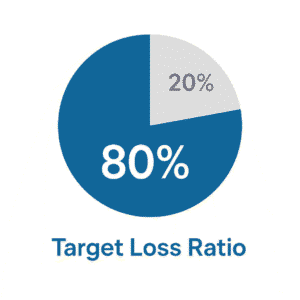
Insurers price employee benefit plans by analyzing expected claims, administration costs, and insurance risk.
They use each group’s claims experience and target loss ratio to predict costs.
Market factors like healthcare inflation and claim trends also affect pricing.
Each year, insurers adjust premiums to reflect usage and rising service costs.
Dental care, prescription drugs, and paramedical treatments are common drivers of increases.
When employees claim more than expected, total costs exceed premiums, and renewal rates go up.
If claims stay low, rates often remain stable or drop slightly.
Consistent usage and realistic budgeting for inflation keep a plan sustainable and predictable.
A balanced plan protects both the employer and employees.
Final Thoughts
Many small businesses still gravitate toward traditional fully insured benefit plans, but more employers are beginning to look at Third-Party Administrators and ASO structures as flexible, competitive alternatives. Rising premiums, limited plan design options, and a need for tighter cost control are pushing companies to consider models that offer clearer pricing, modular plan components, and better long-term sustainability. TPAs and ASO plans give employers another way to manage benefits without sacrificing coverage quality, making them an increasingly practical choice for small and mid-sized businesses across Canada.
Engaging Employees
By using face to face seminars coupled with smart phones employees understand and value their plan
Mental and physical health
By promoting the services that can be found within the plan both absenteeism and presenteeim is reduced
Easy and accessible
By having online access to the plan with either a smart phone, tablet or computer makes the claims process simple
Detailed Reporting
Quarterly reporting and notification of unusual claims makes certain the the cost-containment strategies are successful
Nick is a licensed insurance professional with more than 30 years of experience serving businesses across Ontario. He specializes in business insurance and employee benefits, helping employers design and manage plans that make sense for their teams and budgets. Known for his practical, problem-solving approach, Nick has guided many business owners through the complexities of insurance and benefits with strategies that improve value and control costs.
Aside from his professional accomplishments, Nick is also an avid outdoors enthusiast who enjoys exploring the beauty of nature. He resides in Oakville with his lovely wife Elizabeth, their wonderful children, and their adorable dog, Lyra. Nick is truly a well-rounded individual who is not only passionate about his work, but is also committed to living a full and fulfilling life.